

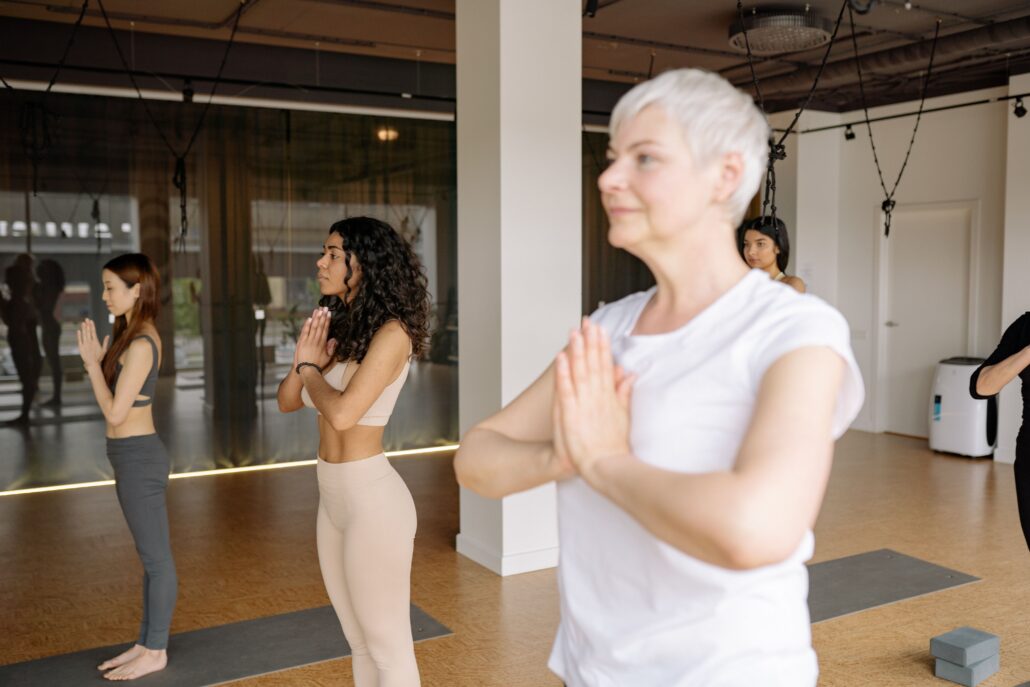
Explore the wellness coaching trends shaping 2026 — what is actually changing, what it means for your practice, and where a coach’s scope of practice ends.
What Is Actually Changing in Wellness Coaching
Wellness coaching trends get recycled constantly. Every January brings the same list of superfoods and morning routines, dressed in a new year’s number. That is not what this article is.
The five shifts below come from what credible industry research is currently reporting, and each one has a direct, practical implication for how you work with clients. Some of them are good news for coaches. One of them is a warning.
The underlying picture is worth stating first, because it frames everything else. McKinsey’s Future of Wellness research, based on a survey of more than 9,000 consumers across the US, UK, Germany and China, found that 84% of consumers now rank wellness as a top priority — while only 13% say they are actually achieving their wellness goals.
Sit with that gap for a moment. It is, in a sentence, the entire case for the health and wellness coaching profession. People are not short of motivation or information. They are short of follow-through. That is precisely the space a coach works in.
Here are the five trends worth your attention this year.
1. The Over-Optimization Backlash
What it is
After years of tracking, scoring, and optimizing every bodily function, a meaningful segment of consumers is pulling back. The Global Wellness Summit named this shift explicitly in its 2026 trends report, describing a move away from data-driven, performance-focused wellness toward emotional repair, pleasure, and human connection.
In plain terms: people are tired of their wellness feeling like a second job.
Why it is growing
Constant self-measurement carries a cost. A sleep score that says you slept badly can make you feel worse than the sleep did. Rings, apps, and streaks that were meant to support wellbeing started generating their own anxiety, and consumers noticed.
Why it matters to coaches
This is arguably the most coach-friendly trend on the list, because it reflects a shift from metrics back toward meaning — and meaning is a conversation, not a device.
Expect more clients arriving with quiet burnout from their own wellness routines. They have the apps, the supplements, and the plan, and they feel worse than when they started.
How to respond responsibly
Ask what a client’s tracking is actually for, and whether it is serving them. Some clients genuinely thrive on data. Others use it as a way to outsource self-trust, and helping them notice that is valuable work.
Practical moves: introduce subjective check-ins alongside any numbers, normalize inconsistent weeks, and be willing to suggest a client turn something off for a fortnight and observe what changes. Our guide to coaching burnout prevention covers the adjacent territory well.
Where your scope ends
If a client’s relationship with tracking, food, or exercise appears rigid, compulsive, or distressing, that is a point for a warm referral to a licensed professional rather than a coaching intervention.
2. Neurowellness and Nervous System Regulation
What it is
The Global Wellness Summit identifies the rise of neurowellness as a major 2026 trend — nervous system regulation moving from a niche interest into a mainstream health frontier. It spans both technology-based neuromodulation devices and long-established practices like breathwork and yoga, which are increasingly recognized for measurable effects on autonomic regulation.
Why it is growing
Language that used to live in clinical settings has entered everyday conversation. Clients now arrive already talking about being “dysregulated” or needing to “downshift,” and they are looking for practices rather than just explanations.
Why it matters to coaches
Stress and recovery sit at the center of most wellness goals. A client who cannot wind down will not sleep well, and a client who does not sleep well will struggle with everything else you are working on together.
Coaches who can competently introduce simple regulation practices — paced breathing, deliberate transitions between work and rest, genuine recovery time built into a week — give clients something they can feel working, quickly.
How to respond responsibly
Learn a small number of simple, well-established practices properly rather than collecting many superficially. Frame them as everyday self-regulation and stress management, which they are.
Be careful with the vocabulary. Using clinical-sounding language casually can imply a level of expertise you do not have, and can leave a client believing they have received something closer to treatment than coaching.
Where your scope ends
Coaches do not treat trauma, anxiety disorders, or any diagnosed condition. If a regulation practice surfaces strong emotional material, the appropriate response is to slow down, support the person in the moment, and refer to a licensed practitioner.
3. The Intention–Action Gap Becomes the Main Event
What it is
The finding cited earlier — 84% prioritizing wellness, 13% achieving their goals — describes the defining problem of the current wellness market. Consumers are not lacking information. Information has never been more abundant or more free.
What they lack is the structure, accountability, and support that turns knowledge into sustained behavior.
Why it is growing
The volume of available health content has increased dramatically, including AI-generated advice available instantly at no cost. Access to information has stopped being the bottleneck. Doing the thing consistently, in a real life with a job and a family and a bad week, is the bottleneck.
Why it matters to coaches
This is the strongest argument for the value of a coach, and it is worth understanding clearly, because it also tells you what not to sell.
If your offer is primarily information — meal plans, workout templates, a PDF of tips — you are competing with free and losing. If your offer is behavior change, accountability, personalization, and a relationship that survives the week someone falls off, you are selling the thing that is actually scarce.
How to respond responsibly
Build your programs around follow-through rather than content volume. Fewer changes, tracked more consistently, with real support between sessions. Design your accountability structures deliberately rather than defaulting to a weekly call.
It also means being honest in your marketing. You are not promising outcomes. You are offering the support structure that makes a client’s own effort more likely to stick.
Where your scope ends
Behavior change support is squarely within coaching. Prescribing diets for medical conditions, advising on medication, or treating disordered eating is not.
4. Longevity, Personalization, and the Data Clients Bring You
What it is
Longevity leads McKinsey’s list of growth areas, with consumers moving away from generic pampering toward diagnostic-led, personalized plans. Biomonitoring and wearables are named as an accelerating category, and the Global Wellness Summit’s 2026 report devotes several trends to longevity in different forms, including a specific focus on women’s healthspan.
Why it is growing
The cost of consumer testing and monitoring has fallen sharply, and the framing has shifted from treating illness to extending healthy years. Clients now arrive holding data — continuous glucose readings, sleep architecture, blood panels, genetic reports.
Why it matters to coaches
Your clients will increasingly bring you numbers and ask what they mean. How you handle that moment matters enormously, both ethically and for your credibility.
There is real work for coaches here, and it is not interpretation. It is helping a client decide what to actually do with information they already have, which behaviors to prioritize, how to build a routine that fits their life, and how to avoid drowning in metrics — which loops directly back to the first trend.
How to respond responsibly
A clean and honest line: “I am not able to interpret that result, and it is worth taking to your doctor. What I can help with is what you want to do differently once you know.”
That answer protects the client, protects you, and is usually more useful than a guess would be.
Where your scope ends
Coaches do not interpret lab results, diagnose, or advise on treatment. That is not caution for its own sake — it is the boundary that keeps coaching a legitimate profession.
5. Wellness Becomes Social Again
What it is
Both major reports point the same direction. McKinsey names social wellness experiences as a growth area, and the Global Wellness Summit describes a “festivalization of wellness” — communal, expressive gatherings prioritizing collective experience over individual optimization.
After years of solitary, app-mediated wellness, people want to do it with other people.
Why it is growing
Loneliness has become a mainstream health conversation, and the individualized model of wellness turned out to be both isolating and easy to abandon. Community makes consistency easier, which is a practical benefit rather than a sentimental one.
Why it matters to coaches
This is a direct business opportunity. Group programs, small cohorts, workshops, and community-based offerings are increasingly what clients want rather than a compromise on one-to-one work.
They also solve a real problem in wellness coaching: the client who does well during the engagement and drifts afterward. A community outlasts a program. If you have not built this into your practice yet, our case for adding group coaching to your business is a useful starting point, and the same shift is visible in corporate wellness, where employers are investing in shared programs rather than individual perks.
How to respond responsibly
Group work requires facilitation skill, not just a bigger calendar invite. Set clear agreements about confidentiality and participation, and be prepared to manage the dynamic when one member dominates or another disengages.
Where your scope ends
Group settings raise the odds that something clinical surfaces in front of other participants. Know in advance how you will pause, support the individual privately, and refer.
How to Use These Trends Without Chasing Them
A caution before you redesign anything. Trends describe where attention is moving, not what your particular clients need. A coach who rebuilds their offer every January around a trends report ends up with a practice nobody can describe, including them.
The more useful approach is to ask which of these five is already showing up in your client conversations, and to go deeper on that one. If your clients keep mentioning exhaustion from their own routines, trends one and three are your material. If they keep bringing you wearable data, trend four is.
Depth in one direction will serve you better than a shallow nod to all five. Our broader guide to building a holistic health and wellness coaching career covers how to position that specialization.
Bringing It All Together
The through-line across all five trends is the same. Consumers have more wellness information, more technology, and more intention than at any point in history — and a small fraction of them are actually reaching their goals.
Technology has not closed that gap. Content has not closed it. What closes it is personalization, accountability, and a human relationship that holds steady through the weeks when motivation does not.
That is what wellness coaches do. The coaches who will thrive through 2026 are the ones who understand their scope clearly, refer without hesitation when something is clinical, and get genuinely good at the human part — because that is the part nothing else replaces.
Ready to lead the future of wellness coaching?
Become a Certified Wellness Life Coach
The Master Wellness Life Coach Certification gives you the coaching frameworks, behavior-change tools, and client resources to support people in building sustainable habits around stress, sleep, movement, nutrition and overall wellbeing — while staying firmly within a coach’s scope of practice.
Enroll in the Master Wellness Life Coach Certification (use code BLOG60N for a discount)






 FALL FLASH SALE: 70% OFF for 48 Hours — CLICK HERE or use code Fall70